This SEO glossary compiles more than 200 of the most common terms you are likely to hear and will definitely need to know during your SEO career.
Search engine optimization, like any specialized industry, has its own unique set of terminology, definitions, and abbreviations.
AJAX
Asynchronous JavaScript and XML is a type of programming that allows a webpage to send and receive information from a server to change that page dynamically without reloading.
Algorithm

A complex computer program used by search engines to retrieve data and deliver results for a query. Search engines use a combination of algorithms to deliver ranked web pages via a results page based on a number of ranking factors and signals.
Alt Attribute
HTML code that provides information used by search engines and screen readers (for blind and visually-impaired people) to understand the contents of an image.
Also known as Alt Text
Analytics
The science of collecting, analyzing, and interpreting data to take future action based on what has (or hasn’t) worked historically.
Anchor Text
The clickable word or words of a link. This text is intended to provide contextual information to people and search engines about what the webpage or website being linked to is about. For instance, if you were creating a link to send your visitors to Search Engine Journal, “Search Engine Journal” is the anchor text.
Artificial Intelligence (AI)
The science of making computers perform tasks that require human intelligence. Rather than following a set of programmed rules (like an algorithm), an AI computer system is basically a digital brain that learns. AI can also make and carry out decisions without human intervention.
Authority
The combination of signals search engines uses to assess websites and webpages for the purposes of ranking.
Bing
The name of Microsoft’s search engine. Bing launched in June 2009, replacing Microsoft Live Search (previously MSN Search and Windows Live Search). Since 2010, Bing has powered Yahoo’s organic search results as part of a search deal Microsoft and Yahoo struck in July 2009.
Bounce Rate
The percentage of website visitors who leave without visiting another page on that website. Bounce rates range widely depending on industry and niche. Although bounce rate can indicate potential content or website issues, it is not a direct ranking factor, according to Google.
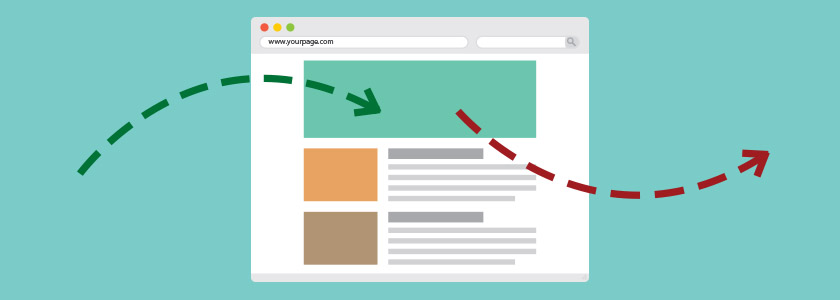
Bounce Rate vs. Exit Rate
Exit Rate is similar to Bounce Rate, with one major difference:
Bounce Rate is the percentage of people that land on a page and leave.
Exit Rate is the percentage of people that leave a specific page (even if they didn’t initially land on that page).
For example, let’s say someone lands on Page A from your site. And they hit their browser’s back button a few seconds later.
That’s a bounce.